
ブログ-BLOG-
Weaving a Big Story from a Little Castella Beside the Great Buddha of Takaoka
Weaving a Big Story from a Little Castella Beside the Great Buddha of Takaoka
Hello everyone. My name is Kei Fukuoka, and I’m the manager of amida coffee in Takaoka City. Locally, I’m sometimes known as “the man who loves Takaoka too much” – and with good reason! I’ve spent years sharing my passion for this hometown of mine on social media and through community projects. Today, I’d like to take a moment to speak from the heart about one of our most beloved creations at the café: a tiny castella cake that carries a very big story. It’s a story spun right here beside our city’s symbol, the Great Buddha of Takaoka, and it’s one that intertwines history, craftsmanship, local pride, and a dash of fun. Please get comfortable with a cup of coffee in hand, and let me share with you the journey of this little castella and why it means so much to us in Takaoka.
A Café Born from Local Love and a City’s Heritage
To set the stage, let me tell you a bit about where all of this started. Takaoka City was founded over 400 years ago in 1609 by Lord Toshinaga Maeda, and since its founding it has seen its share of ups and downs. Yet through all the challenges – including fires, wars, and changes of era – our city has endured and retained a strong spirit. At the heart of that spirit stands the Takaoka Daibutsu (Great Buddha of Takaoka), a magnificent 16-meter (52-foot) bronze Buddha statue that watches benevolently over our downtown. He’s not just any Buddha statue; he’s often called “the most handsome Buddha in Japan” for his gentle, refined features and dignified expression. The Great Buddha is the pride of Takaoka’s people. In fact, we consider him one of Japan’s Three Great Buddhas (alongside the ones in Nara and Kamakura). Imagine a serene, bronze Buddha with kind eyes and a slight smile, sitting right in the middle of the city – that’s our Daibutsu, our “Great Buddha,” and he has been a symbol of hope and resilience for generations.
It was this very symbol and my overwhelming love for my hometown that inspired me to start amida coffee about five years ago. I dreamed of creating a place right next to the Great Buddha where people could relax, connect, and rediscover the charm and pride of Takaoka. In 2021, together with some like-minded friends, we opened amida coffee literally a stone’s throw from the Buddha’s pedestal. From day one, our concept has been “coffee and community at the feet of the Great Buddha.” We serve specialty coffee and local delicacies in the shadow of a national treasure, hoping that both locals and visitors can feel the unique warmth of this location. I’ll admit, when we first opened the café, I was equal parts excited and anxious. The downtown area of Takaoka had been quiet in recent years – empty shops and aging buildings left the streets feeling a bit lonely. I worried: would anyone come to a café by an old Buddha statue? Could our idea of revitalizing the town actually work?
Thanks to the incredible support of the community (and perhaps a blessing from Buddha-sama himself), our fears proved unfounded. The café quickly became a lively spot, not just for local regulars but also for travelers from across Japan and even abroad. People would wander in out of curiosity – drawn by the aroma of freshly roasted coffee or by the sight of the big Buddha – and they’d often leave with a smile, saying “I never knew a place like this existed!” Seeing visitors relax with a latte topped with Buddha latte art or families snapping photos of the view of the statue from our second-floor window, I realized that we were doing more than selling coffee and sweets. We were helping people create fond memories of Takaoka. Every time someone says “I’ll never forget having coffee with that Buddha view,” my heart swells with happiness. It means we’re doing something right in shining a light on our city’s heritage and weaving a bit of that heritage into everyday life.
The Birth of the “Great Buddha Castella”
Among all the goodies and experiences we offer at amida coffee, there is one item that has become our signature – a humble little castella cake shaped like the Great Buddha. We call it the “Takaoka Daibutsu Castella,” or just the Great Buddha Castella. It might look like a simple, bite-sized sponge cake on a stick, but for me it encapsulates so much of what this café – and this community – stand for. Let me share how this little dessert was born.
In conceiving the Great Buddha Castella, I asked myself: What is something uniquely Takaoka that we can share with our visitors? We already had latte art featuring the Buddha’s image, and even a Buddha-shaped monaka wafer dessert. But I wanted something people could hold in their hand as they strolled around town, something fun, easy to eat on the go, and deeply connected to our local culture. That’s when the idea struck: a baby castella in the shape of our Great Buddha.
For those not familiar, castella is a type of sponge cake originally introduced to Japan centuries ago (the recipe came via Portuguese traders). It’s usually a soft, sweet cake – often sold as loaves or as small “baby castella” pieces at festivals. Our vision was to make a miniature castella in the shape of the Buddha’s figure. In other words, a tiny Buddha you can eat! Not only would it be adorable and photo-worthy, but it would let people literally “take a bite” of Takaoka’s heritage, so to speak.
Of course, wanting to make a Buddha-shaped cake and actually making one are two very different things. We knew we’d need a special mold to bake it in – and not just any mold, but one that captured the gentle face and form of the Takaoka Daibutsu. Here in Takaoka, we are famous for our traditional cast metalwork called Takaoka Dōki (Takaoka copperware). For over 400 years, our city’s craftsmen have been casting everything from temple bells to bronze statues (indeed, the Great Buddha itself, rebuilt in the 1930s after a fire, was cast by local artisans). If anyone could create a durable, detailed cake mold of a Buddha, it would be Takaoka’s metalworkers.
So, embracing the spirit of local production for local pride, we collaborated with a local foundry to craft an original cast-iron mold in the shape of the Great Buddha. This was an exciting process – seeing skilled artisans pour metal to form a smiling little Buddha mold gave me goosebumps. When the first mold was completed, with its intricate depiction of the Buddha’s head and robes in miniature, I knew we had something special. We seasoned the heavy metal mold, heated it up, and poured in our batter for the very first test batch… I still remember the anticipation, the smell of sweet cake filling the kitchen, and the moment we popped the mold open to reveal a tray of tiny golden Buddhas! They weren’t perfect at first (recipe testing always takes some tweaking), but they already looked so cute and full of character. I felt a surge of joy – our little “edible Buddha” was coming to life.
Using local ingredients was just as important to me as using local craftsmanship. We insisted on a batter made with flour milled from wheat grown right here in Toyama Prefecture and eggs laid by local farm chickens. By doing so, our castella truly became a 100% Takaoka creation: local symbol, local materials, local hands. The recipe is a classic castella style but adjusted through trial and error to get the right fluffiness and flavor. We aimed for a not-too-sweet, old-fashioned taste, something that would appeal to visitors of all ages – from children to grandparents. After some experimentation, we hit on the right balance: a gently sweet, moist sponge cake with a hint of honey, rich in egg flavor, that’s delightful on its own but also pairs nicely with coffee or tea.
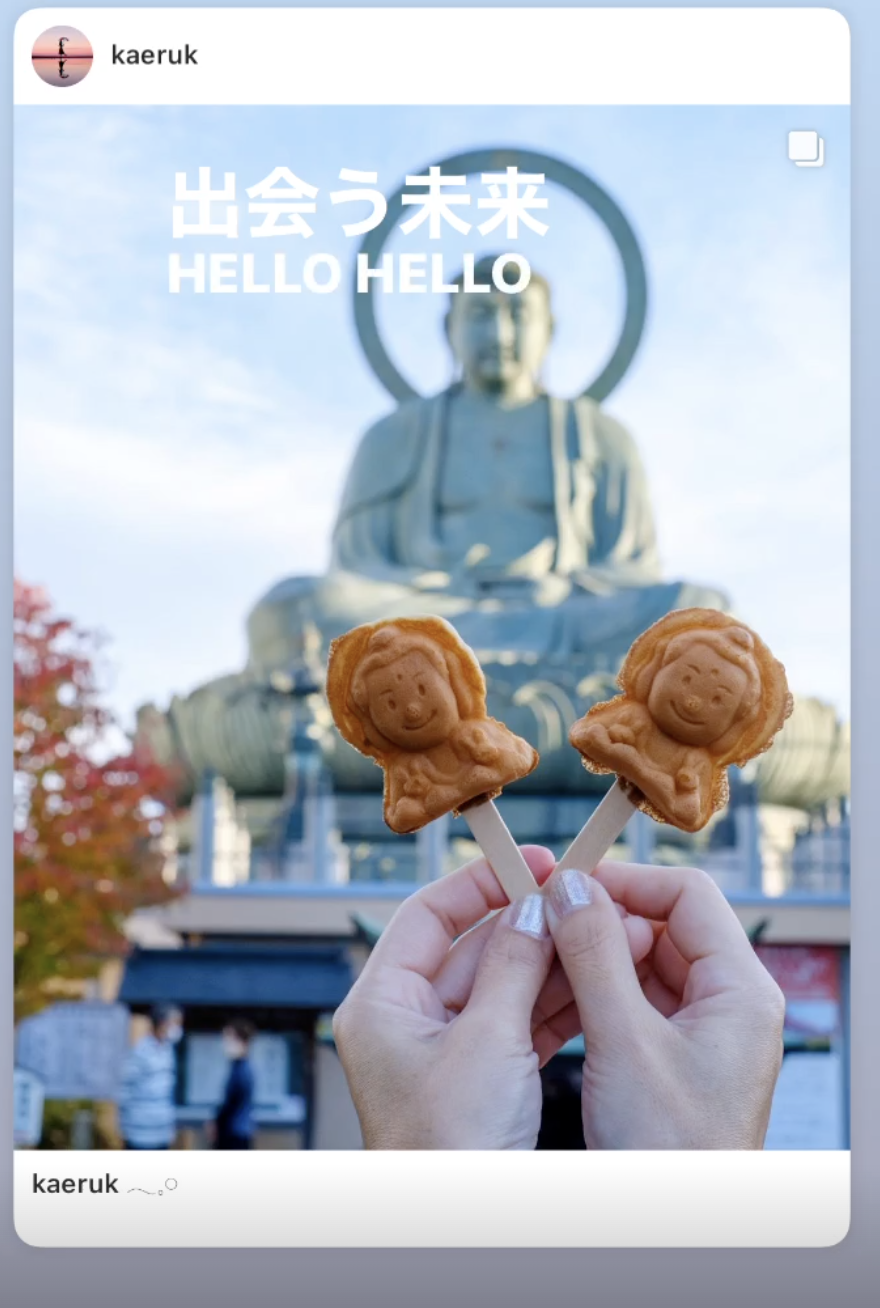
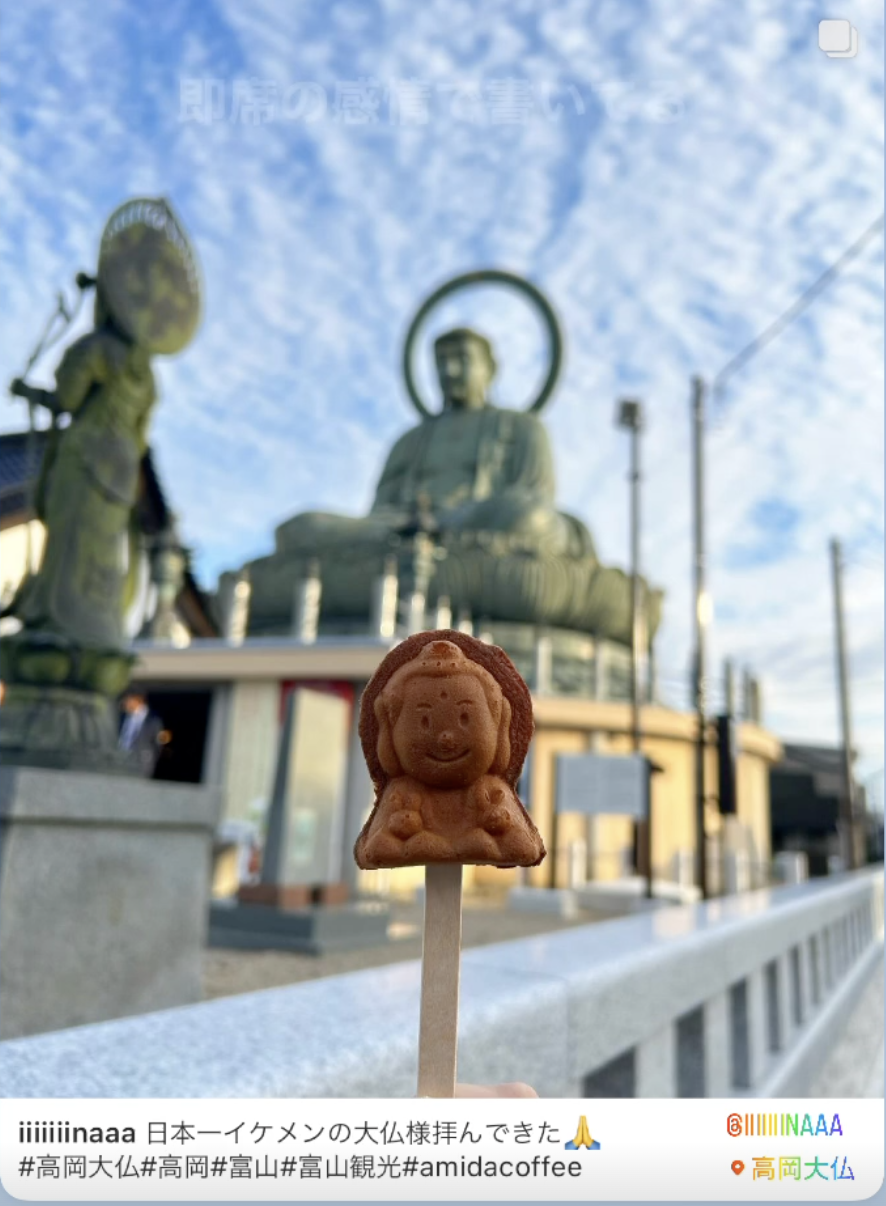
When we finally introduced the Great Buddha Castella to our menu, I remember feeling a mix of nerves and excitement. Would people get it? Was it too gimmicky? Those worries evaporated the moment I saw our first customers react. A family visiting from another city bought a few castellas and gasped, “Oh my, it’s really shaped like the Buddha!” They immediately held them up with the actual Great Buddha in the background to take photos – big smiles all around. Kids absolutely love them; their eyes light up at the sight of a Buddha they can hold and munch on like a lollipop. (Don’t worry, Buddha-sama, it’s all with great respect and affection!) Tourists began buying them as a fun souvenir, and locals, too, take pride in giving them to out-of-town friends, saying “See, this is our Great Buddha in a cake!”
It might be a little castella, but it started to make a big impact in our community. Suddenly, more people were walking around the temple area with these castella on sticks, snapping photos with the statue, and sharing them on social media. The buzz even led to local media featuring our “edible Buddha” in magazines and TV spots. From the start, one of my hopes was that this castella could encourage more foot traffic and joyful activity in the streets of Takaoka – seeing that come true has been incredibly rewarding. On busy weekends now, I’ll often peek outside our shop and see people near the Buddha statue laughing, chatting, and posing with their castella treats. It’s a small sight, but it represents something much larger – a re-energized cityscape, a bridge between our heritage and the present day.
An Omikuji Surprise in Each Cake
As if a Buddha-shaped cake wasn’t charming enough, we decided to add another twist to make our castella experience uniquely Japanese and extra delightful. Every single Buddha castella you buy at amida coffee comes with a little hidden fortune, an “omikuji”, to make your visit memorable. Let me explain what that is and how it works, especially for our friends from overseas.
Omikuji (おみくじ) are random fortune strips you typically find at Shinto shrines or Buddhist temples in Japan. You shake a box or draw a stick to receive a little piece of paper that reveals your fortune, ranging from great blessings to little curses (common categories go from “Great Blessing” down to “Great Curse”). It’s a traditional activity, especially popular during New Year’s visits to temples, and people often tie the paper to a tree’s branch if the fortune is bad or keep it with them if it’s good. It’s all in lighthearted fun and part of experiencing Japanese culture.
At amida coffee, we thought: since we are right next to a Buddhist temple and our theme is all about the Great Buddha, why not blend omikuji fortunes with our castella cakes? After all, our hope is that enjoying these castellas brings a bit of good luck and happiness to everyone who tries them. So we got to work designing our own mini-fortunes specially for this purpose. We printed tiny omikuji messages and attached them to the wooden sticks that hold up each castella (the castella is served lollipop-style on a stick, which actually makes it perfect for this, as the fortune is wrapped around the stick or tucked in a little sleeve).
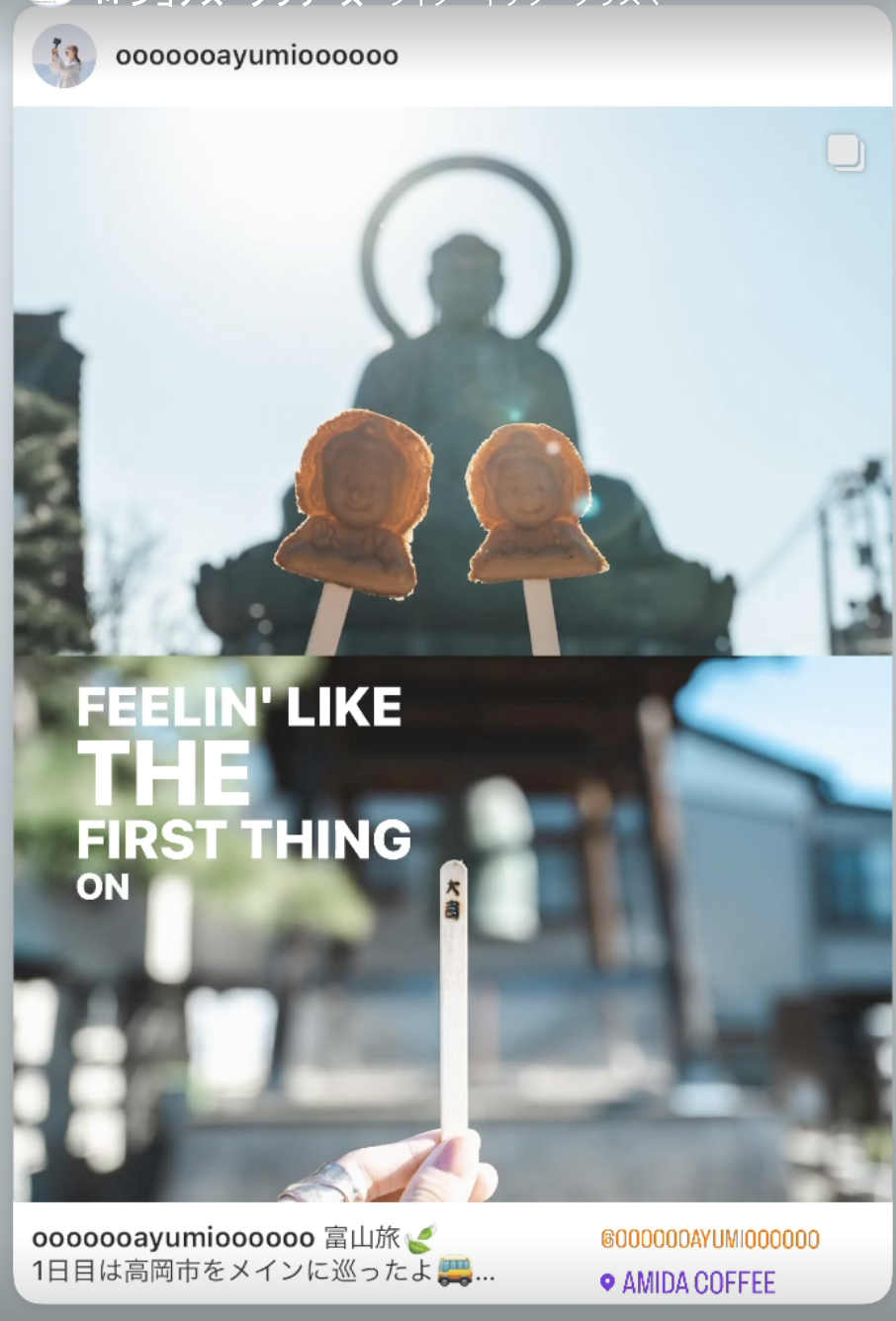
Here’s how it works: When you order a Buddha castella, it will come on a stick, and around that stick you’ll find a small rolled piece of paper. After you’ve eaten your tasty cake (or before, if you can’t wait!), you open the paper to reveal your fortune. These aren’t your ordinary shrine omikuji – we’ve given them a Takaoka Daibutsu twist. For example, one of the best outcomes you can get isn’t just “Great Blessing”, it’s “Daibutsu Blessing” – we like to think that’s a blessing straight from the Big Buddha himself! We also have fortunes with playful local flavor, like fortunes that may mention finding serenity like the Buddha or enjoying the blessings of good coffee (a little sense of humor never hurts). There are several levels of luck, all written in both Japanese and English, so our international visitors can enjoy them too. You might draw Great Blessing (大吉), Medium Blessing (中吉), Buddha’s Smile, Little Blessing, etc. – all sorts of fun messages of encouragement and luck.
The addition of the omikuji element turned our little castella into an experience rather than just a snack. I often watch customers after they finish their castella, eagerly unrolling the tiny fortune slip. I’ve seen friends laughing together if one gets “末吉” (a small blessing, almost like a “better luck next time”), or a child jumping in excitement because they got the “Hyper Daibutsu Blessing” (yes, that one is the top prize – an extra-big good luck!). It’s heartwarming to see people not only savoring the flavor of our castella but also engaging with this piece of Japanese culture in a casual, enjoyable way. Some visitors told me that getting an omikuji here saved them a trip to the shrine’s fortune box – two birds with one stone! And since our fortunes are a bit more light-hearted, even if someone draws a less-than-stellar fortune, it usually brings out grins and giggles. For instance, one of our special slips might read that Buddha says “Today might be cloudy, but your smile will shine through” – a gentle reminder that even on tough days we have inner light.
From a cultural standpoint, I love that we’ve managed to merge a traditional custom with a modern cafe treat. It’s not every day you get to eat a dessert and receive a life advice or prediction from a Buddha! This omikuji castella concept embodies what amida coffee aspires to do: honoring tradition while adding a creative, friendly twist that welcomes everyone to participate. Whether you are deeply spiritual or just here for the fun, you can appreciate the sentiment behind that tiny piece of paper. In a way, it’s also our way of sharing a blessing from Takaoka with you. Not everyone has time to attend a full temple ceremony or draw fortunes at the shrine, but through a castella and omikuji, you still get a small taste of the spiritual joy that this area has offered for centuries.
I recall one particular episode that moved me: An elderly couple visited us – they were locals who came to see how the new café by the Daibutsu was doing. They each got a castella. The husband drew a fortune that said “Small Blessing,” and jokingly shrugged that it sounded about right for his luck. His wife, however, got one that read “Big Buddha Blessing – Great Fortune”, the best of the lot. She clapped her hands and said, “See dear, Buddha knows I’m the lucky one between us!” We all laughed. Then the couple told me that in all their years in Takaoka, they never imagined eating a Buddha-shaped cake or getting an omikuji outside of the New Year holidays. “This was a charming experience,” they said, “and it makes us proud that our city has something so whimsical yet meaningful to offer.” That comment meant the world to me. It told me that our little castella was not just a novelty, but a new thread in the fabric of Takaoka’s story – one that both honors and refreshes local tradition.
Spreading Smiles and Weaving Community – One Castella at a Time
When I look at our Great Buddha Castella now, I see more than a cute confection. I see the hands of the craftsmen who cast the metal mold, pouring their skill and soul into every detail of Buddha’s likeness. I see the farmers behind the scenes, growing the wheat and raising the chickens that give us flour and eggs, grounding our cafe in the fertile lands of Toyama. I see the excitement of our staff when we brainstormed and tested the recipe, determined to make something delicious and heartfelt. And most importantly, I see the faces of our customers – the laughter, the surprise, the enjoyment this little treat brings to people from all walks of life. In that sense, our *“small castella” truly carries a big story. It’s the story of a community coming together to create something unique. It’s the story of a city that isn’t afraid to innovate while cherishing its roots. And it’s a personal story for me, too: of pursuing a somewhat quirky idea and having it blossom into a beloved symbol of hospitality here.
As the café’s owner (and a lifelong Takaoka cheerleader), nothing makes me happier than seeing our Great Buddha Castella become a tiny ambassador of Takaoka. It embodies what I’ve always felt about this city – that even something small, done with love and rooted in heritage, can have a large impact. A single castella might brighten someone’s day, or be the spark that gets a traveler to remember Takaoka fondly and tell their friends about it. A handful of them might get people walking around the neighborhood, adding a bit of bustle and life to our streets. And who knows, maybe one person reading their omikuji at our café finds a message that resonates with them in a meaningful way. These are little ripples, but together over time, they form a wave of positive change and connection.
Before I opened amida coffee, I used to wonder how we could “bring more light to Takaoka’s history and culture” in modern times. Our Great Buddha has always been radiant (figuratively and even literally when the sun sets and he’s lit up against the evening sky), but I wanted the community and visitors to feel that radiance in everyday life – not just on special occasions or holidays. Now, every time I see someone biting into a Buddha castella or excitedly unwrapping their fortune slip, I feel like that wish is coming true bit by bit. The light of our heritage is shining in ordinary moments – over coffee, through a sweet taste, via a playful fortune – and those moments accumulate into a brighter, warmer community spirit.
From the bottom of my heart, thank you to everyone who has tried our Buddha castella, shared it on social media, or given it as a gift. You’ve helped make this little idea a big success and a point of pride for Takaoka. If you haven’t tried it yet and you find yourself in our neck of the woods, I earnestly invite you to drop by amida coffee. Come have a cup of our specialty coffee, gaze up at the Great Buddha right outside our window (truly a sight to behold, I promise!), and treat yourself to a freshly baked Great Buddha Castella. It’s a simple pleasure that carries the love of an entire town in its recipe. Whether you draw the best fortune or even a cheeky bad one, I hope it leaves you with a smile, a memory, and a bit of insight into why I adore this city so much.
In closing, I believe that food can tell a story, even a bite-sized piece of cake. Through this little castella, we’re weaving together the threads of Takaoka’s past and present – one delicious story at a time. I’m so excited to continue spinning these tales of community and joy as we move forward. The next time you take a walk next to our Great Buddha, perhaps munching on a castella, remember that you too are now part of this big, sweet story of Takaoka. Thank you for reading, and I can’t wait to welcome you to our café – where a tiny Buddha-shaped cake is ready to offer you a big warm welcome to our beloved city.
– Kei (amida coffee Manager), with love from Takaoka. ぜひ高岡に遊びに来てくださいね! (Please come visit us in Takaoka, we’d love to see you!)
(日本語訳)
高岡大仏のとなりで紡ぐ、小さなカステラの大きな物語
高岡大仏と、そのすぐ横にあるカフェ「amidacoffee」。日本三大仏のひとつで「日本一のイケメン」と称される高岡大仏は、高岡の誇りです。そのお膝元で生まれた物語をお届けします。
こんにちは、amidacoffee店長のKeiです。高岡市でカフェを営みながら、“高岡を愛しすぎた男”としてインフルエンサー活動もしています。それくらい高岡の町と高岡大仏さまが大好きで、毎日大仏さまに見守られながらコーヒーを淹れています。高岡大仏は日本三大仏の一つで、実は「日本一の美男大仏」とも呼ばれているんですよ。初めて拝顔したとき、その凛々しいお顔に思わず二度見してしまったほど。そんなイケメンな大仏さまのすぐ真横で、2021年の冬に「amidacoffee」というカフェをオープンしました。高岡の歴史と文化にもう一度光を当てたい、そして訪れる人にこの町の誇りを感じてほしい――そんな想いで始めたカフェです。今日は僕がこの場所で生み出した、とっておきの看板スイーツ「大仏カステラ」のお話をたっぷりに語らせてください。おいしさの秘密に込めたまちづくりのストーリー、そして観光で訪れる皆さんにぜひ体験してほしい楽しみ方まで、存分にお伝えしたいと思います。
鋳物職人が手掛けた特製「大仏カステラ」の焼き型
僕たちの大仏カステラは、その名の通り高岡大仏さまの形をした可愛いベビーカステラです。開発にあたってまずこだわったのは、“本物”の風合いを持たせることでした。ただ単に大仏の形を真似るだけでなく、高岡の伝統の息吹きを感じるスイーツにしたかったんです。そこで着目したのが、地元が誇る高岡銅器という伝統工芸でした。カステラを焼くための型を特注で作り、それもプラスチックやシリコンではなく銅(カッパー)で作ってもらったんです。銅は熱伝導率が高く、加熱すると遠赤外線効果もあると言われています。つまり、銅製の焼き型で焼くことで生地の芯までふんわり火が通り、外はサクッ、中はしっとりという絶妙な焼き上がりになるんですよ。実際、黄金色にこんがり焼けた小さな大仏さま型のカステラが型からぷくっと顔を出した瞬間は、毎回感動ものです。職人技が光る銅の型のおかげで、ひと口サイズでも本格的な焼き菓子に仕上がっています。
ところで、この特製焼き型を手掛けてくださった職人さんがまたすごい方なんです。有限会社北辰工業の社長、定塚康宏さんという鋳物職人の方なのですが、実は今の3代目高岡大仏の円光背(えんこうはい。仏像の背後にある後光の輪の部分)を製作したのはこの方のお父さんで先代社長なんです!。そう、大仏さまそのものの一部を作った職人さんに、僕らのカステラ型をお願いしたんです!完成した銅の型を初めて手にしたときの重量感と輝き――それはまるで高岡の歴史の一片を手に乗せたような不思議な感覚でした。高岡大仏を支えてきた伝統工芸の技術が、そのまま小さなカステラの型に凝縮されたようで。「この型からどんな物語が焼き上がるんだろう?」と胸が高鳴ったのを覚えています。
大仏カステラには、そんな職人技と歴史の物語がぎゅっと詰まっています。銅の型が伝える熱は単に生地を焼くだけではありません。高岡の町の情熱や、ものづくりの魂までも伝えてくれているように感じます。ただ美味しいだけじゃない、まちづくりへの想いが宿った一品だからこそ、多くのお客様に手に取っていただけるのかなと思っています。大仏さまの姿をかたどったこの小さな焼き菓子を見つめるとき、僕はいつも胸の奥がじんわりと温かくなるんです。高岡の伝統と誇り、そして未来への希望まで、この中に閉じ込められているようで。そんな特別な焼き型で生まれた大仏カステラ、次はその生地へのこだわりについてお話ししましょう。
地元の恵みで作る、優しい甘さのカステラ生地
美味しいカステラづくりで何より大切なのは、もちろんカステラ生地です。せっかく素晴らしい焼き型ができたのですから、素材にもとことんこだわりたい。そこで、このカステラの生地は兄弟店である「19HITOYASUMIいっきゅうひとやすみ」と協力して開発・製造しています。高岡を含む富山県内でカフェやスイーツを展開する仲間のお店で、地元食材を生かした美味しいお菓子作りに定評がある頼もしい存在です。19HITOYASUMIの厨房で生地を用意し、amidacoffeeへ運んで仕上げています。その生地に使っている主な材料を聞けば、皆さんきっと驚くと思いますよ。まさに富山の恵みがギュッと詰まっているんです。
- 富山県産小麦粉「ゆきちから」 – 粘りと甘みが特徴の県産小麦。しっとりふんわりとした生地に欠かせません。
- 仁光園の平飼い卵 – 富山県高岡市と小矢部市にある仁光園さんの卵を使用。のびのび育った鶏の新鮮卵はコクが違います。
- となみ乳業の牛乳 – 濃厚でありながら後味すっきりの富山県産地元牛乳。生地にやさしいミルク感としっとり感を与えてくれます。
- 国産バター – 北海道産を中心とした上質なバター。豊かな風味で、生地の旨みをぐっと引き立てます。
これらの素材は添加物を一切使用せずにシンプルな配合で混ぜ合わせ、生地にしています。焼き立てのカステラからは、小麦と卵とバターの香ばしく甘い香りがふわっと立ち上ります。その香りをかいだ瞬間、お客様の「わぁ~いい匂い!」という笑顔がこぼれるのを見るのが、僕は大好きです。
焼きたての大仏カステラは甘さ控えめで優しい味わい。でも面白いことに、このカステラは時間が経つほどに甘みとコクが増していくんです。実はカステラって、作り立てよりも少し時間を置いた方がしっとり馴染んで美味しくなるって言われますよね。まさにそれで、焼いた直後よりも少し経ってから食べると、生地全体にしっとり感が広がって甘みがグッと深まるんです。砂糖や蜂蜜などの自然な甘さが落ち着いて、生地に浸透していくのでしょうか。僕はこの変化を「優しさが広がる」なんて表現しています。時間が生み出すまろやかな優しさ…なんだか、人の心も時間をかけて育むと優しくなるのと似ている気がしませんか? もちろん焼きたてもフワッフワで最高ですが、もしお土産に買って帰って翌日食べる機会があれば、その味の変化も楽しんでみてくださいね。きっとカステラからじんわりと染み出すような優しい甘さに、ほっと笑みがこぼれるはずです。
サプライズなお楽しみ!「おみくじ付き大仏カステラ」
amidacoffee 名物の「大仏カステラ」。こんがり焼けた小さなお姿が愛らしいと評判です。串に仕立ててあるので食べ歩きもしやすく、食べ終わった後には楽しいサプライズが…!
ところで皆さん、「おみくじ付き大仏カステラ」って聞いたことありますか?実はこの大仏カステラ、ただ美味しいだけじゃなく遊び心満載の仕掛けがあるんです。カステラには小さな木の棒が刺さっていて、手に持って食べられるようになっています。これは片手にカステラを持って食べ歩きができるようにと工夫したもの。カフェでテイクアウトして、大仏さまを眺めながら周辺を散策するのにピッタリなんですよ。「木の棒がついているので、カフェの外に出て大仏さまとの記念写真を撮ってみてください!」なんて声をかけると、皆さん本当にニコニコと外に出て撮影を楽しまれます。青空の下、大仏さまをバックにカステラを掲げてハイ、チーズ!SNS映えもばっちりなので、その写真をInstagramにアップしてくれるお客様も多いですね。
しかし!大仏カステラの真のサプライズはここからです。美味しくカステラを食べ終わった後、ふと手元の棒を見てみてください。実はこの棒自体がおみくじになっているんです!棒の片面に文字が浮かび上がっていて、あなたの運勢を教えてくれます。内容は…「大仏吉」「大吉」「中吉」「小吉」「末吉」といった具合。そう、amidacoffeeオリジナルの運勢ランク「大仏吉」なんてものもあるんですよ!これはもう引いた人だけのお楽しみ。大吉を超えるご利益がありそうな響きじゃないですか?(笑)実際にこの仕組みを考えたときは、「大仏さまの御利益にあやかって特別なおみくじを作ろう!」とスタッフみんなで盛り上がりました。【「とにかく大仏さまにあやかるぞ!」という強い意志】が現れた演出になったかなと思っています。そして、売り上げの一部はもちろん、大仏様への浄財として、そしてこの街の発展にも使われています!
おみくじ付きのカステラは、お子様連れのファミリーや友達同士のグループにも大好評です。カフェの2階席から大仏さまを眺めながら、「何が出るかな?」とワクワクしつつカステラを頬張り、食べ終わったらみんなで棒を見せ合いっこ。「やったー!大仏吉出た!今日は良いことあるかも!」「私は中吉。でも大仏さまに会えただけで大吉だよね」なんて、あちこちで笑い声が上がります。小さな棒に書かれた運勢ですが、されど運勢。旅先でこういう運試しができると、不思議と心に残る思い出になるものです。僕もお客様と一緒になって「今日は大吉出るといいですね~」なんて会話しながら見守っていますが、棒に「大仏吉」の文字が現れたときは思わず拍手してしまいます。皆さんが驚いて笑顔になる瞬間を見るのが、本当に幸せなんです。
さらに、この大仏カステラおみくじ、実は高岡観光の新たなアトラクション的存在にもなりつつあります。高岡大仏をお参りして、隣のamidacoffeeでカステラを食べて運勢占い――そんなコースが定番になりつつあり、県外からの観光客の方々にも「面白い体験ができた!」と喜んでいただいています。InstagramやTikTokでも「#大仏カステラ」「#おみくじ付きカステラ」なんてハッシュタグで投稿してくださる方がいて、高岡の新名物としてじわじわ広まっている実感があります。家族旅行の思い出、友達との休日のおでかけストーリー、カップルのデートの1シーン――その中にこのカステラがおみくじ付きで登場することで、みんなの心に残る特別な一枚を演出できているのなら、こんなに嬉しいことはありません。
大仏さまへの愛を、一口のカステラに込めて
物語の結びに、少しだけ真面目なお話をさせてください。僕がこの大仏カステラを通じて一番伝えたいのは、「高岡っていいところでしょう?」という思いです。銅の焼き型で感じる職人技、地元食材で広がる優しい甘み、おみくじでみんなが笑顔になる遊び心――すべては高岡という町の魅力そのものだと思うんです。高岡は歴史と文化が息づく町です。400年以上続く鋳物の伝統、豊かな自然に育まれた食、そして人々のおもてなしの心。そのすべてがギュッと詰まった高岡大仏というシンボルの隣で、僕はカフェという形でそれらを発信しています。
カステラという小さなお菓子ですが、僕にとっては高岡の物語を語るための大切なツールです。お客様が「おいしい!」と笑顔になってくれたとき、「この焼き型ね、実は大仏さまの光背を作った職人さんが作ってくれたんですよ」とお話しすると「えぇ!すごい!」と目を輝かせてくれます。地元の素材の説明をすれば、「富山にこんなおいしい小麦があるんだ」と驚かれます。おみくじが出てくれば、「大仏吉なんて初めて!面白い!」とみんな笑顔になります。そんな一つひとつのリアクションが、高岡という町とお客様とを結ぶご縁になっている気がするんです。
僕はこの町が大好きで、高岡大仏さまが大好きで、そしてここに来てくださる皆さんのことも大好きです。カフェという場を通じて、旅のひとときに彩りを添え、「高岡に来てよかった」「また来たいな」と思ってもらえるようなおもてなしをすること。それが僕の使命であり、喜びでもあります。大仏さまの足元で毎日コーヒーを淹れ、カステラを焼きながら、ふと顔を上げると窓の外にあの優しい微笑みが見えるんです。大仏さまが「今日もよく頑張ってるね」と頷いてくれているようで、「よし、もっと頑張ろう!」って元気をもらえます。
最後に改めて…。高岡にお越しの際は、ぜひ当店にもふらりと立ち寄ってみてください。そして大仏カステラを手に取り、高岡大仏さまと一緒に写真を撮って、ぱくっと頬張り、運試しのおみくじまで楽しんでいってください。【「このカステラを手に、まち歩きを楽しんでもらい、にぎわいをつくりたい」】──僕はいつもそう願っています[7]。皆さんの笑顔とともに、高岡の町がますます元気になることを夢見て。カフェ店長Keiは今日も、大仏さまのとなりで心を込めてコーヒーとカステラを用意してお待ちしていますね。では、いただきますと笑顔の花が咲く高岡で、お会いしましょう!ありがとうございました。